

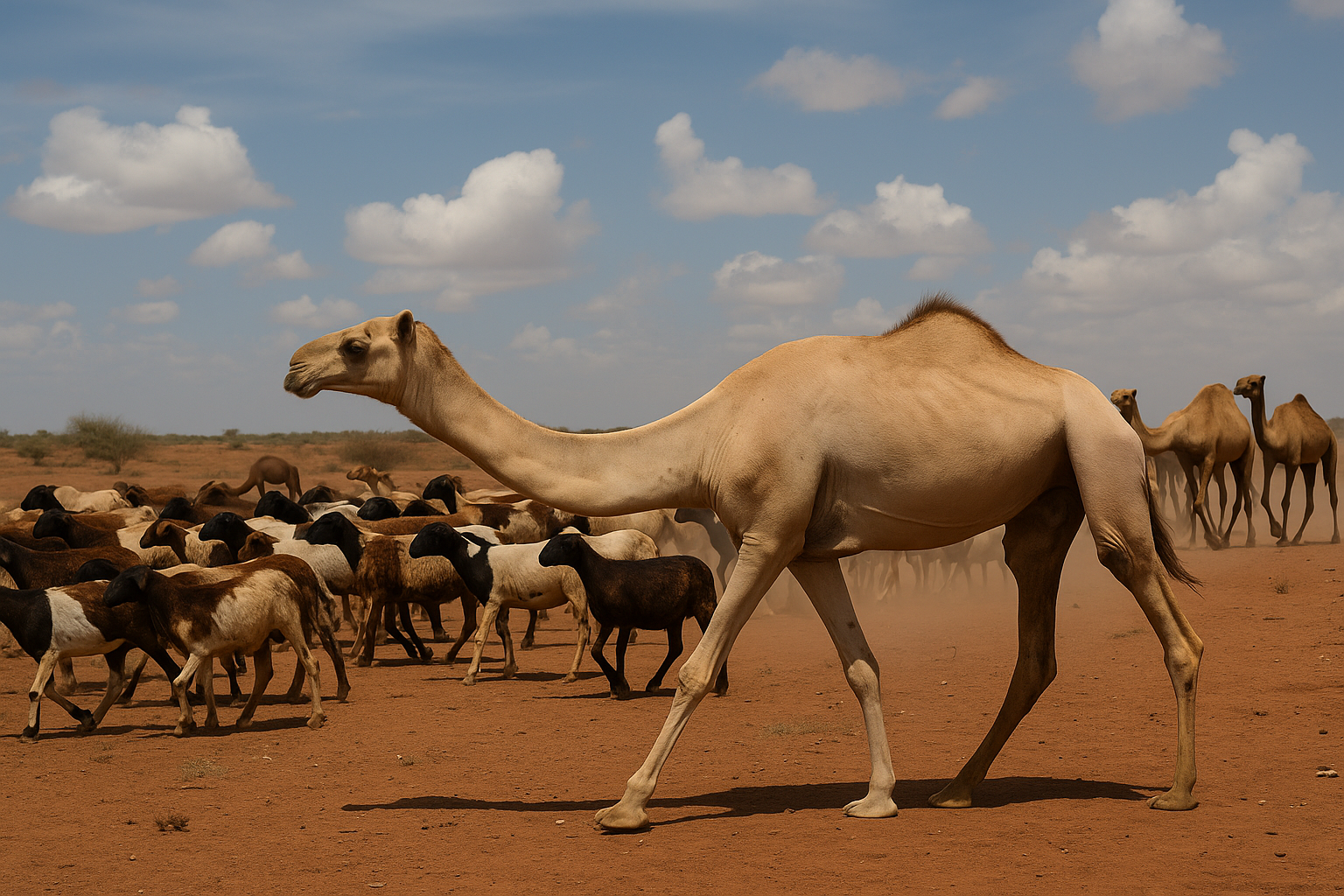
Australia’s decision to phase out live sheep exports and the ongoing civil war in Sudan have unexpectedly created a golden window of opportunity for Somalia — a country whose economy and culture are deeply rooted in livestock. As global markets, particularly in the Gulf region, look for new and reliable suppliers, Somalia is emerging as a natural replacement. With the right planning, strategy, and commitment, this shift could evolve into a billion-dollar trade opportunity that reshapes the nation’s economic future.
For decades, Australia and Sudan have dominated the live animal export market to the Middle East, supplying sheep, goats, and camels to countries such as Saudi Arabia, the United Arab Emirates, and Oman. But now, both competitors are struggling. Sudan’s civil conflict has crippled its trade routes and export facilities, while Australia’s government has committed to ending live sheep exports by 2028 due to animal welfare concerns. This double vacuum leaves a significant gap in supply — and Somalia, strategically located on the Horn of Africa and home to millions of livestock, is perfectly positioned to fill it.
In fact, Somalia’s livestock exports are already booming. According to recent trade figures, Somalia’s export earnings jumped from about $523 million in 2021 to nearly $974 million in 2024, and experts predict it could surpass $1 billion in 2025. The Gulf states have long trusted Somali livestock, especially during the annual Hajj season when demand for live animals peaks. The country’s proximity, shared cultural ties, and lower transportation costs make it a natural alternative to faraway suppliers.
But opportunity alone is not enough. To fully capitalize on this moment, Somalia must move from being a traditional exporter to becoming a modern, competitive livestock economy. That begins with improving the health, quality, and traceability of its animals. Investing in veterinary services, disease control, and feed quality can transform Somali herds into premium export products that meet international standards. The government can establish national vaccination programs, create mobile vet units for rural areas, and train local youth as animal health workers. Ensuring every exported animal is disease-free and properly certified will not only protect market access but also raise Somalia’s reputation as a reliable supplier.
Equally important is infrastructure. Somalia’s ports — like Berbera, Bosaso, and Mogadishu — need upgrades in loading facilities, holding pens, and quarantine stations to meet global trade requirements. Better roads and transport networks from grazing lands to ports would reduce animal stress, weight loss, and death during transit. These investments create jobs far beyond herding — in logistics, port operations, veterinary services, and feed supply. Every link in the livestock value chain can become a source of employment and economic growth.
The Somali government can also negotiate long-term trade contracts with Gulf countries, ensuring predictable demand and pricing. Establishing a national livestock board or export council could help regulate quality, prevent overexporting, and coordinate marketing. Partnerships with international development organizations could bring technical support and investment for disease control and sustainable grazing. In parallel, Somalia should explore value-added processing — exporting meat, hides, and dairy products instead of only live animals. This would multiply earnings and create even more local jobs.
Improving animal quality and expanding exports won’t only strengthen the economy — it will also stabilize communities. Livestock herding supports most rural families in Somalia, and when markets are strong, poverty and displacement decrease. A robust livestock industry encourages youth to stay in rural areas instead of migrating, provides income for women involved in trade and processing, and builds hope in a country that has faced decades of hardship.
Of course, challenges remain. Disease outbreaks, drought, insecurity, and weak infrastructure could slow progress if not managed carefully. Somalia’s government must prioritize climate resilience — investing in drought early warning systems, water sources, and sustainable grazing management. Strict biosecurity standards are vital to avoid trade bans from importing countries. Transparency and fairness are also key: profits must reach herders and small traders, not just large exporters or political elites.
Still, the opportunity is unprecedented. With Australia exiting and Sudan struggling, Somalia stands at a turning point. The country can either watch others take the lead — or rise to claim its place as the Horn of Africa’s livestock powerhouse. By combining animal health reforms, infrastructure upgrades, and community empowerment, Somalia could turn this trade shift into a national transformation worth over a billion dollars a year.
This isn’t just about exporting animals — it’s about exporting resilience, pride, and hope. If Somalia acts decisively, the world could soon recognize its livestock not only for their quality but as a symbol of a nation rebuilding itself through determination, strategy, and unity.