
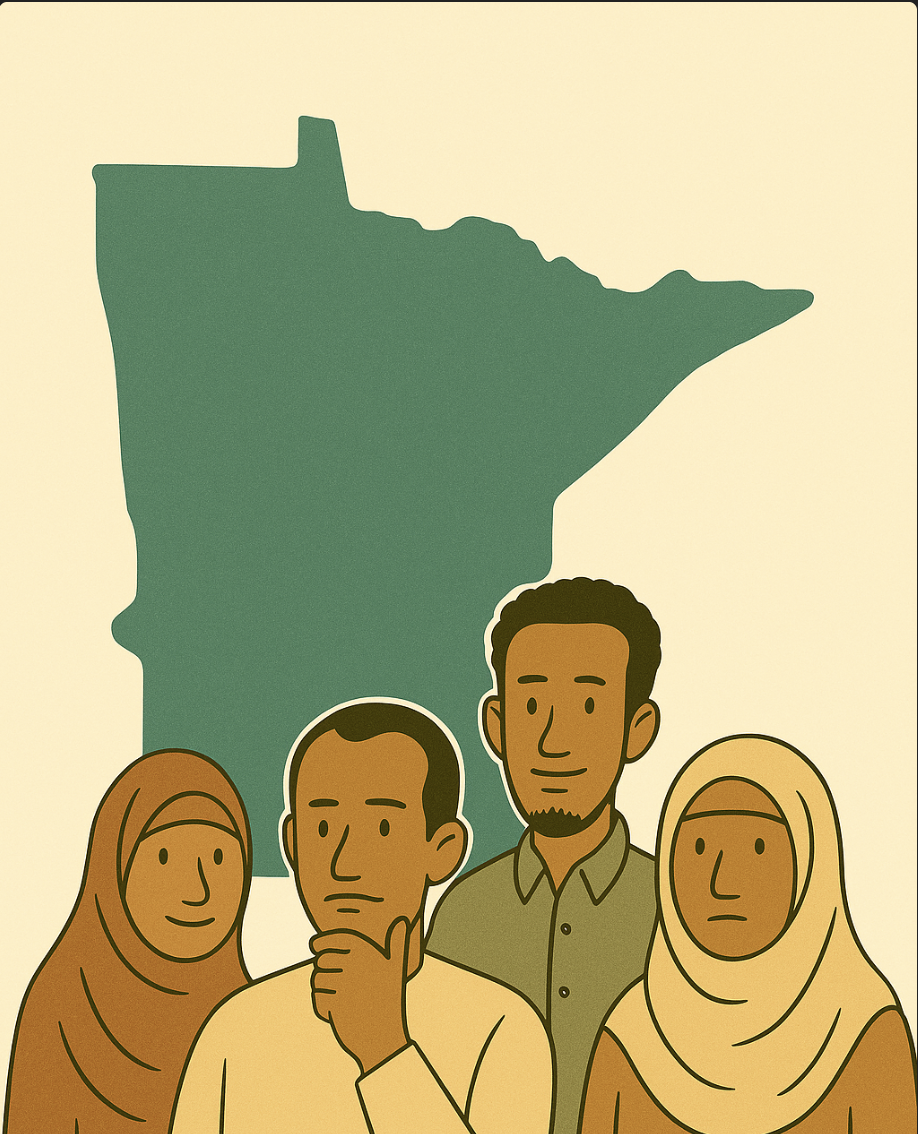
When Donald Trump announced he would remove Temporary Protected Status (TPS) for Somalis living in Minnesota, the shock rippled through a community that has called the state home for more than three decades. For thousands of families, TPS has not been a temporary policy but the backbone of their stability, the document that allowed them to work, raise children, build businesses, and live without the constant shadow of deportation. Almost overnight, that certainty was shaken.
For many Somali Minnesotans, this decision felt deeply personal — not only because of its impact, but because it questioned their place in a state they helped shape. The fear was immediate, the confusion widespread, and the stakes painfully high.
The legal process behind the move is complicated, but what makes this moment especially alarming is that TPS was never designed to be wielded as a political weapon. Under U.S. law, TPS can only be terminated if conditions in the home country significantly improve. Somalia, still struggling with insecurity, political instability, and humanitarian crises, has not reached such a point. Legally, TPS revocation must apply to an entire nationality nationwide, not limited to a single state or targeted community. Immigration experts warn that the administration’s attempt to revoke protection only in Minnesota doesn’t align with established procedures and risks violating constitutional protections. Courts are expected to examine whether racial or political motives played a role — something the TPS framework explicitly prohibits.
The importance of TPS for Somali Minnesotans cannot be overstated. For many, it has meant more than a work permit — it has been the difference between security and fear. Families have built their lives around the stability it offers. Parents have raised American-born children who know only Minnesota as home. Workers have filled essential roles in the state’s hospitals, schools, logistics networks, and community services. Business owners have opened shops, restaurants, trucking companies, and professional firms that contribute to local economies. Removing TPS risks tearing families apart, draining the workforce, and destabilizing neighborhoods that depend on Somali contributions.
Beyond economics, the humanitarian aspect looms large. Somalia remains one of the least stable countries in the world. Forcing people back would place them in immediate danger and reopen wounds they have spent decades healing. Many TPS holders left Somalia as children — they have no memory of the country and no ties to return to safely. The moral cost of deporting people into conflict is heavy, and it hangs over Minnesota like a storm cloud.
But the response within Minnesota has shown that this community is not alone. As soon as the announcement was made, legal groups, immigrant advocates, religious leaders, and civil rights organizations launched challenges, calling the move discriminatory and unlawful. State officials expressed alarm, signaling their willingness to oppose federal overreach. The Somali community mobilized quickly, holding meetings, organizing rallies, and informing neighbors about legal resources. Local mosques opened their doors for emergency consultations. Attorneys began preparing injunctions. The state’s long tradition of welcoming refugees is becoming the backbone of its resistance.
Still, Minnesota cannot rely on moral outrage alone. The state and the community must work together to build a defense strong enough to protect those at risk. Legal pressure is essential — lawsuits challenging the legality of selective TPS termination will likely determine whether the administration’s order stands. Minnesota can strengthen sanctuary policies, expand legal aid, support community organizations, and ensure social services remain accessible to all residents regardless of immigration status. Local leaders can also raise national awareness and push Congress to finally fix the shortcomings of TPS by creating a path to permanent residency for long-term recipients.
For the Somali community itself, unity and organization will be crucial. Communities must stay informed, attend legal workshops, support advocacy campaigns, and maintain strong communication networks so no one faces this crisis alone. Faith leaders, elders, youth groups, business owners, and activists must move as one voice to demand fairness, dignity, and due process.
What is happening now in Minnesota is bigger than immigration policy. It is a test of identity — of what kind of state Minnesota wants to be, and what kind of country America chooses to become. TPS was designed to protect people fleeing instability, not to be revoked selectively based on political rhetoric or fear. Somali Minnesotans have proven their commitment to this state through decades of hard work, sacrifice, and community building. They have earned more than temporary status; they have earned belonging.
The struggle ahead will be long, but Minnesota has faced long battles before. How it responds now will echo far beyond state lines, sending a message about justice, humanity, and the meaning of protection in a nation built by those who once sought it.