Somalia’s long struggle with governance cannot be understood simply by recounting the rise and fall of administrations. At its core lies a deeper cultural and psychological crisis: the way authority is imagined, pursued, and exercised. Across different governments—whether transitional, federal, or regional—leadership has too often been treated as a personal privilege, a symbol of status, or a reward for clan victory rather than a solemn responsibility to the nation. This misunderstanding of power continues to undermine state-building efforts and block the creation of stable, service-oriented institutions.
One of the most damaging patterns in Somali politics is the dramatic shift in leadership behavior once officials attain office. Presidents who enter power with promises of reform frequently end up behaving as though the state is an extension of their personal ambitions. Decision-making becomes impulsive, emotional, and driven by short-term political goals. Political psychology helps explain this transformation: people who gain power commonly develop a sense of exceptionalism, believing they are less bound by the rules that govern others. Studies show that powerful or wealthy individuals around the world are more likely to cheat, lie, or violate norms simply because they believe they can. Even countries such as the United States and the United Kingdom—long seen as champions of international order—have ignored the very principles they helped create when those principles conflicted with their interests. Power narrows vision. It allows individuals and nations alike to overlook the consequences of their actions.
In Somalia, the consequences of this psychological distortion are magnified by weak institutions. When checks and balances are fragile, and when accountability mechanisms barely exist, leaders face few real consequences for overreach or misconduct. Each administration becomes an experiment in personalized governance, where appointments, reforms, and public resources can be manipulated according to the leader’s immediate political needs. Instead of strengthening the state, power is used to settle political scores, reward loyalists, and expand personal influence. This behavior, repeated across administrations, creates a cycle in which public authority becomes deeply disconnected from public responsibility.
The second major challenge facing Somalia is the chronic inability to establish strong, rule-based institutions. Nations do not depend on the strength of individual leaders; they depend on the strength of their institutions. Laws and regulations are meant to create clarity, discipline, and continuity—ensuring that the state can function even as leaders change. Yet Somalia’s efforts to rebuild its institutions since the early 2000s have repeatedly been undermined by corrupt and clan-driven processes for selecting civil servants. Instead of appointing qualified professionals, key positions are filled through patronage networks, clan negotiations, favoritism, and, at times, direct bribery. This approach guarantees weak performance. A ministry cannot operate effectively if the people leading it are selected for political loyalty rather than competence. When institutions are populated by unqualified individuals, they fail to deliver services, lose public trust, and collapse the moment there is a change in political leadership.
Law should serve as the guiding force that restrains political excess and protects citizens from arbitrary decisions. When law is respected, governance becomes predictable and fair. But when law is manipulated or ignored, the government becomes unstable. Somalia’s constitutional disputes, political interference in the judiciary, and irregularities in appointments all weaken the sense of order that citizens depend on. Without rule-bound institutions, governance becomes improvisational, reactive, and chaotic. Somalia’s political instability is therefore not only a problem of leaders behaving irresponsibly; it is equally a structural failure rooted in the absence of disciplined, professional institutions capable of functioning independently of political personalities.
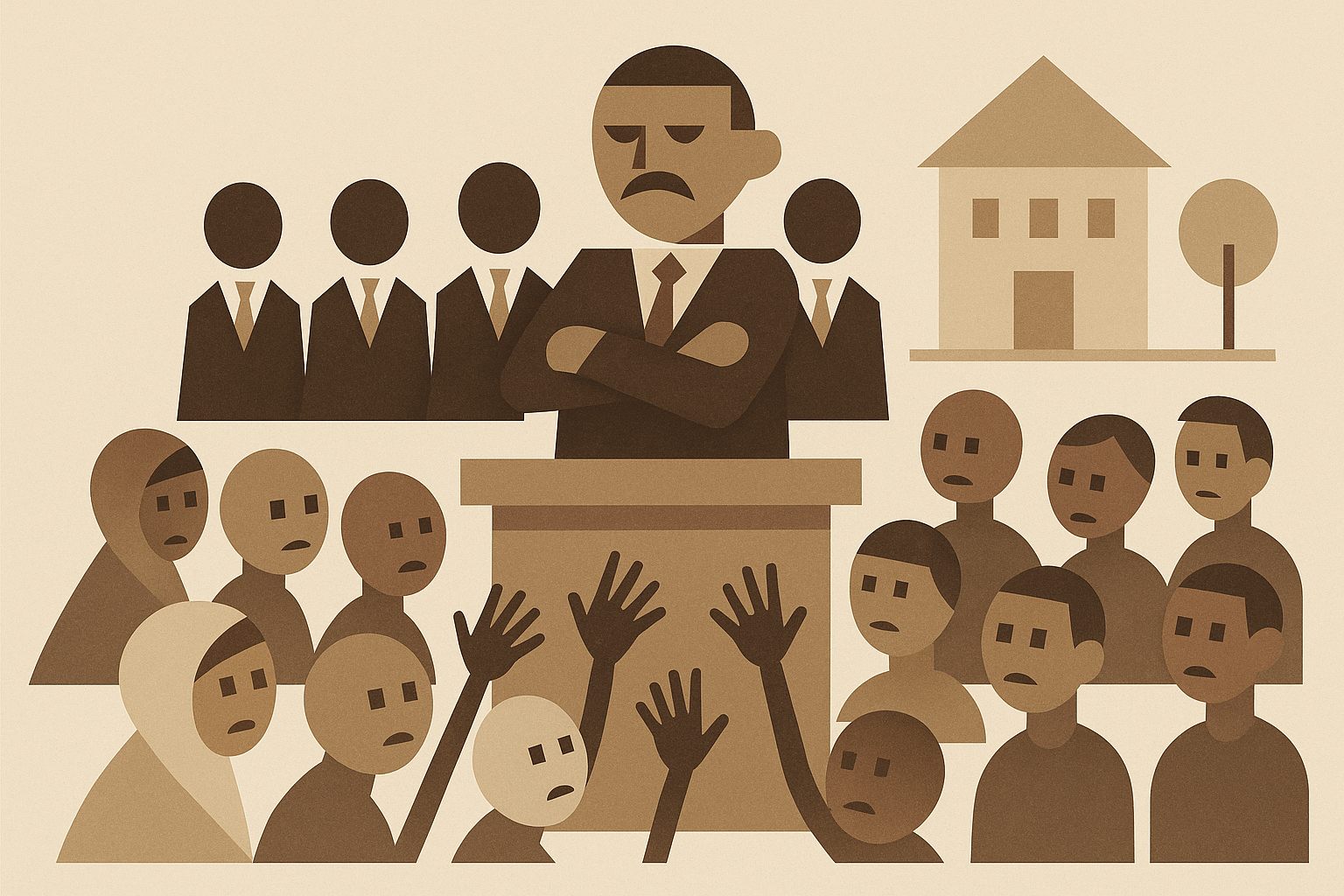
The disconnect between political leaders and citizens’ daily realities deepens this crisis. Somalia’s political class often operates within an insulated world of negotiations, conferences, and symbolic victories while the population struggles with profound hardship. The suffering is real and widespread. A striking example occurred when pregnant women in Mogadishu were forced to give birth outside government hospitals because they could not afford the fees—an event that illustrates how deeply institutions have failed. Such tragedies expose a state unable to fulfill even its most basic responsibilities. Yet political debate remains dominated by clan disputes, political rivalries, and rhetorical battles that do little to address the urgent needs of ordinary Somalis. Citizens themselves, often distracted by tribal loyalty or political theater, can become disconnected from the pursuit of rights-based governance that would genuinely improve their lives.
For Somalia to escape this cycle, it requires a fundamental change in the way leadership is understood. Authority is not a badge of honor or a personal accomplishment. It is a commitment to service and a burden of responsibility. Leaders must begin to see their role not as an opportunity to advance personal or clan interests, but as a duty to strengthen the state, protect citizens, and uphold the law without exception. This shift in mindset is essential for any meaningful progress. It demands respect for the rule of law, genuine dedication to institutional independence, transparency in public decisions, and a deep awareness of the realities faced by ordinary people. Leadership must be grounded in empathy, discipline, and a clear recognition that power, when misused, destroys the very foundations of the nation.
Somalia’s future depends on this transformation. A society that demands rights instead of symbolic victories, and leaders who recognize that authority is responsibility rather than privilege, can break the cycle of instability. Strong institutions built on merit and governed by law can provide the stability that Somalia has long sought. The path forward is difficult, but it begins with a simple truth: power must serve the people, not overshadow them.