
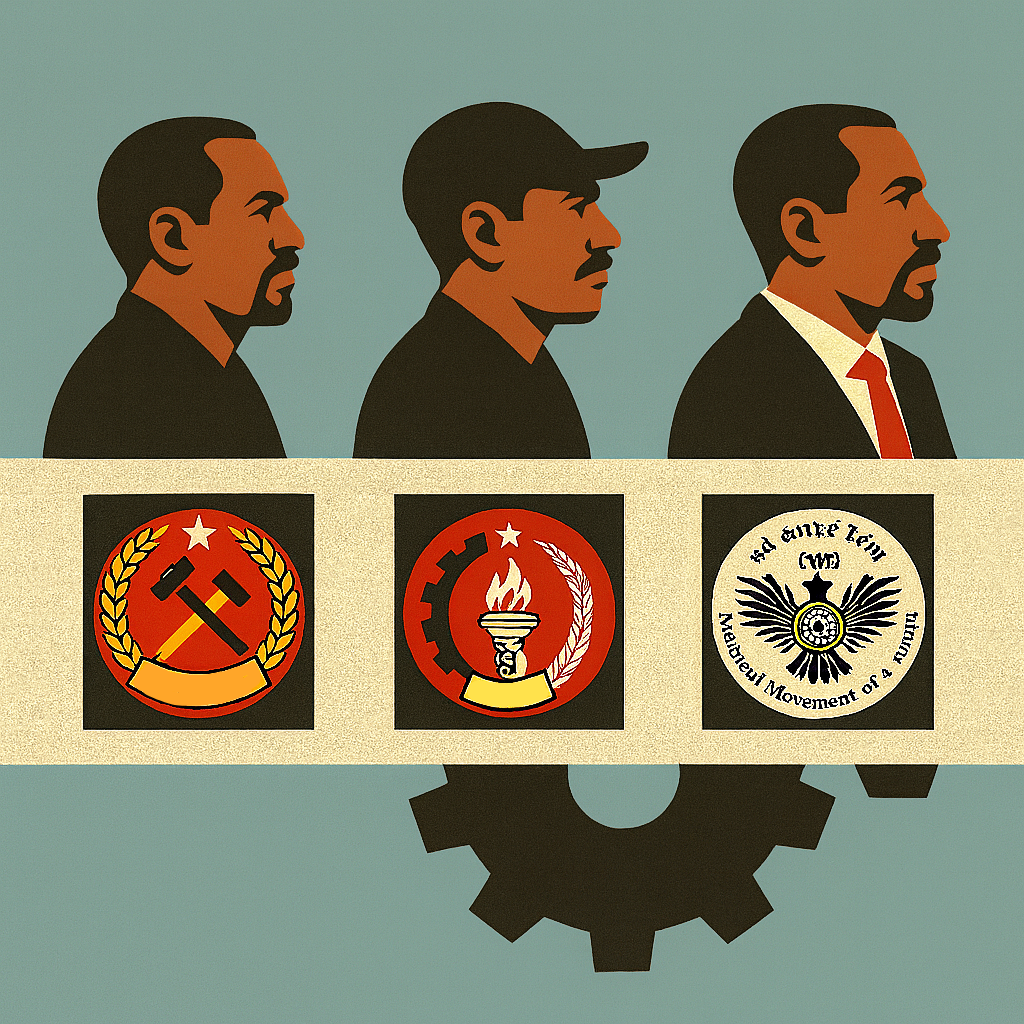
In Ethiopia, power moves in a circle that seems to have no end — a wheel forged from conflict, hardened by fear, and pushed forward by generations of leaders who inherit authority but rarely transform its meaning. Regimes rise and fall, flags change, slogans shift, and faces rotate through the halls of the state. Yet beneath all these surface changes, the same heavy machinery continues to turn. At the center of this circle once stood the Tigray People’s Liberation Front (TPLF), the force that shaped more than two decades of Ethiopia’s political and institutional life. Today, that same group — once the gatekeeper of the nation’s power — now finds itself outside the gates, accusing others of the same injustices they once enforced. And so the wheel keeps turning.
For over twenty years, the TPLF helped build a political order rooted in centralized authority and tight institutional control. Opposition voices were not simply debated; they were managed, monitored, or removed. Journalists were detained, activists intimidated, and civic actors pushed into silence. What made this system enduring was not only the decisions of individual leaders, but the design of the institutions themselves. Intelligence bodies operated with suspicion as their guiding doctrine. The judiciary bent under political weight. Local kebeles functioned as eyes and ears of the ruling party. Even the civil service became entangled with political loyalty, leaving little room for neutrality.
This institutional architecture turned governance into an equation of control. Dissent was seen as danger, and danger justified repression. It was a logic that repeated itself daily — predictable, efficient, and harmful. Many lived in fear of being labeled an enemy of the state, often for reasons as simple as asking questions or expressing criticism. The TPLF-era system did not merely punish dissent; it taught society to anticipate punishment.
But no architecture, no matter how fortified, can outlast time. The wheel shifted. The TPLF lost its dominant position, and with it, its control over the machinery it had once operated. Suddenly outside the system, they began to speak the language of injustice — complaining of exclusion, political targeting, and the very forms of repression that had defined their governance. Their grievances, while real, carry an echo that Ethiopia has heard many times before: the former rulers becoming the victims of the very structures they built.
Yet the tragedy is not the hypocrisy. The tragedy is that Ethiopia never rebuilt the system. The old institutions remained, merely adjusting to serve new masters. The intelligence networks did not change their methods. The judiciary did not reinvent its principles. The regional and local administrations continued to function with the same habits of surveillance and suspicion. Even the political culture — shaped for decades by zero-sum calculations and survival instincts — continued without interruption. New rulers entered the palace, but the palace did not change.
This is why Ethiopia finds itself repeating its past. Power continues to be treated as something to guard aggressively rather than to govern responsibly. Opposition continues to be framed as a threat instead of a democratic necessity. Institutions, instead of creating stability, reinforce domination. Leaders inherit not only authority, but the anxieties of those before them — and they behave accordingly.
The TPLF’s current complaints may draw sympathy from some and frustration from others, but they highlight a deeper structural truth: Ethiopia is trapped not by one group, but by an institutional culture that resists transformation. A system built for control will continue to produce control, no matter who sits at the top. A machine designed for dominance will continue to generate domination, no matter who holds the keys.
Breaking this cycle requires more than political transitions or temporary alliances. Ethiopia must build institutions that serve the public rather than the ruling party — courts that stand independently, intelligence services that protect rather than intimidate, local administrations that measure their success by trust rather than fear, and a political culture that welcomes dissent as a sign of national strength, not weakness.
It also requires memory. Too often, each new administration demands accountability for its opponents while excusing its own actions. Without collective honesty, without a willingness to confront abuses made by all sides, injustice becomes a tradition passed from one regime to the next. Ethiopia must remember clearly, speak openly, and reform deeply — or it will continue to circle the same wounds.
The wheel of power has spun long enough. Each turn has carried the weight of unlearned lessons, repeated failures, and leadership shaped more by fear than by vision. The question now is whether Ethiopia will finally step off this wheel and build a political future no longer haunted by the ghosts of its institutions.
Power does not have to repeat itself. But unless Ethiopia transforms the system that holds it together, the wheel will continue to turn — slowly grinding hope beneath its rim, generation after generation.